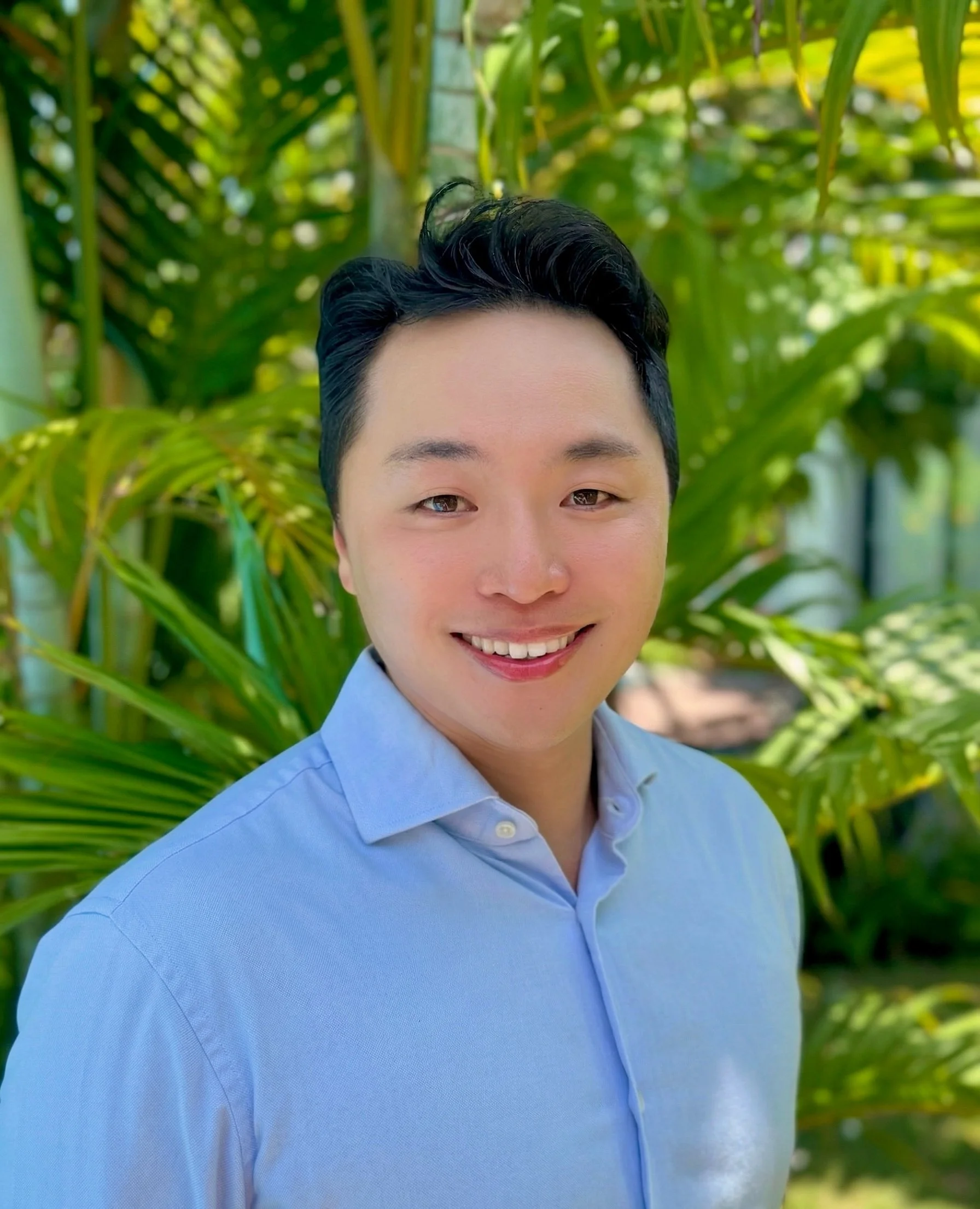
(Photo Credit: Scott Sasaki)
HISTORIAN OF RELIGION, MIGRATION, AND EMPIRE IN THE UNITED STATES AND THE PACIFIC WORLD
I am a historian of religion, migration and borders, U.S. empire, and Asian America, with particular interests in immigration and border governance, the Gilded Age and Progressive Era United States, the religious and cultural dimensions of U.S. foreign relations, and the transpacific history of the United States after the Civil War.
I am an Assistant Professor/Faculty Fellow (APFF) in Asian/Pacific/American Studies at New York University's Department of Social and Cultural Analysis. I received my PhD in the Study of Religion from Harvard University in 2026, with fields in North American Religions and History, and was a Graduate Student Associate at Harvard’s Weatherhead Center for International Affairs.
Much of my research is rooted in the late nineteenth and early twentieth centuries, when mass migration, American expansion across the Pacific, new forms of federal governance, racial classification, and movements for social and moral reform became deeply entangled. My work examines how migration, national belonging, and American power were negotiated among state institutions, reform movements, religious networks, and people on the move: how religious actors and social reformers participated in debates over immigration and national belonging; how ideas about morality, race, sexuality, family, religion, and civilization entered the classification and governance of migrants; and how Asian and Asian American communities contested and reshaped those categories. At NYU, I teach across Asian/Pacific/American Studies, U.S. history, migration, religion, race, and empire.
I’m currently revising my first book manuscript, Sacred Borders, Divine Hierarchies, a religious-discursive history of the making of federal immigration restriction and Asian exclusion between the 1870s and 1920s. Moving across the United States and the Pacific world, the book traces missionaries, reform organizations, Protestant institutions, immigration officials, and Asian and Asian American actors to show how debates over race, gender, family, morality, civilization, and religious difference shaped both the language and administrative practices of immigration restriction.
My broader research and writing extend these questions across the histories of Asian migration and diaspora, citizenship and border governance, racial science and the body, and U.S. power in the Pacific. I am completing “Migration and Diaspora” for the forthcoming Oxford Handbook of Asian American Religions (Oxford University Press, forthcoming in 2027). While Sacred Borders is centered in the Gilded Age and Progressive Era, my newer work follows questions of migration, memory, and American power further into the twentieth-century Pacific. My second book project, Freedom’s Debtors: Transpacific Christianity, Memory, and the Moral Economy of U.S. Empire in Asia, examines how memories of American war, aid, liberation, and resettlement generated competing claims of gratitude, indebtedness, alliance, and political obligation across Korea, the Philippines, Taiwan, and Vietnamese refugee and diasporic communities.
My research has been supported by the Weatherhead Center for International Affairs, Harvard Graduate School of Arts and Sciences, Massachusetts Historical Society, Rockefeller Archive Center, Congregational Library & Archives, APARRI, the American Academy of Religion, and the Organization of American Historians, among others. My research on religion, U.S. immigration restriction, and Asian America was featured in Harvard’s GSAS Research Magazine. You can read the full feature here.
Before completing my PhD at Harvard, I received an MTS from Harvard Divinity School and earned an undergraduate degree at Yonsei University in Seoul. Prior to graduate school, I also worked for the United Nations Educational, Scientific and Cultural Organization (UNESCO) and the Asian edition of the International Herald Tribune, which later became New York Times Global Edition, in Seoul.